
Glutathione cream after dermaplaning: when to apply it and what to use first
Can you use glutathione cream after dermaplaning? Not the same night. How long to wait before a retinol and salicylic acid night cream, what to apply on freshly dermaplaned skin, and safe face-razor tips.
Can I apply glutathione cream after dermaplaning?
Not the same night. Dermaplaning removes fine hair and a thin layer of surface skin, so actives like retinol, salicylic acid and vitamin C can sting or redden it. Use a plain moisturiser and sunscreen first, and wait until your skin feels completely calm, usually 2 to 3 days, before using a glutathione night cream again.
What should I apply after dermaplaning?
A plain, fragrance-free moisturiser or soothing gel on the first night, and a broad-spectrum sunscreen the next morning. Skip scrubs, toners with alcohol, acids, retinol and home remedies like lemon or turmeric packs until your skin is calm.
Does dermaplaning help creams absorb better?
It can make skin feel smoother and creams spread more evenly, because fine hair and some dead cells are removed. That is also why skin is more sensitive just afterwards, so strong actives should wait a few days.
Do not apply glutathione cream on the same night you dermaplane. Dermaplaning, whether done at a salon or with a face razor at home, scrapes away fine hair and a thin layer of surface skin, so a night cream with retinol and salicylic acid can sting; use a plain moisturiser and sunscreen first, then restart the glutathione cream once your skin feels completely calm, usually after 2 to 3 days.
Face razors and eyebrow razors have become a common part of home grooming in India, and many people use them for fine facial hair before events. Here is how to fit a glutathione night cream around them safely.
Why freshly dermaplaned skin needs a gap
A dermaplaning blade removes vellus hair (peach fuzz) and some of the outermost dead skin cells. That leaves skin smoother but also thinner on the surface for a short time, so it lets ingredients in more easily and reacts faster. Retinol, salicylic acid and vitamin C are useful on calm skin, but on just-shaved skin they can cause stinging, redness and peeling. If you already use a retinol cream regularly, your skin is more delicate than you might expect, and dermaplaning adds to that.
A simple timeline
| When | What to use | What to skip |
|---|---|---|
| Night before | Gentle cleanser and plain moisturiser | Retinol, salicylic acid, scrubs and peels |
| Day of dermaplaning | Gentle cleanse, plain fragrance-free moisturiser or aloe gel, sunscreen if going out | Glutathione night cream, acids, toners with alcohol, makeup if skin stings |
| Next 1 to 2 days | Gentle face wash, plain moisturiser, sunscreen every morning | Scrubs, face packs, lemon or turmeric pastes, steaming |
| Day 3 onwards (skin fully calm) | Restart the glutathione night cream with a thin layer | Using it on any area that is still red, cut or stinging |
These are general guides. After a salon or clinic session, follow the aftercare you were given; if your skin is sensitive, allow longer.
How to restart a glutathione night cream
- Check your skin first. No redness, stinging when you wash, small cuts or flaking.
- Cleanse gently with a mild face wash such as Gluta Boost Face Wash and lukewarm water, then pat dry and wait a few minutes.
- Use less than usual. A thin layer of GlutaNex Glutathione Night Cream, about half a pea on the first night, avoiding any nicked spots.
- Moisturise on top if your skin feels tight; see glutathione cream and moisturiser.
- Go back to your usual routine over the next few nights if your skin stays comfortable, starting at 2 to 3 nights a week if you are new to retinol.
- Sunscreen every morning, because both dermaplaning and retinol leave skin more sun-sensitive.
Safe dermaplaning at home
- Use a clean, sharp face razor meant for the face, and do not share it.
- Work on clean, dry skin, holding the skin taut, with short, light strokes at a low angle.
- Skip any area with pimples, cold sores, cuts, rashes or sunburn.
- Avoid the eyelids and the edges of the lips.
- Do not dermaplane too often: once every 3 to 4 weeks is common for home routines.
- Fine hair grows back the same; shaving does not make it thicker or darker.
If you remove facial hair in other ways, our guides on waxing and threading, shaving and hair removal cream explain the gap for each.
Dermaplaning vs chemical peels and scrubs
All three remove surface cells, so do not stack them. Skip scrubs and at-home peels for about a week before and after dermaplaning, and never do a peel and dermaplaning on the same day unless a professional is managing both. After a peel, the wait for retinol is longer; see glutathione cream after a chemical peel.
Dermaplaning before an event
Many people dermaplane just before a wedding or party so makeup sits smoothly. Do it 2 to 3 days before, not the same day, so any redness settles. Pause the glutathione night cream for those 2 to 3 nights, then use plain moisturiser. Our makeup after glutathione cream guide covers how to prepare skin for makeup.
If your skin stings or burns
If the glutathione cream stings after dermaplaning, wash it off with cool water and use only a plain moisturiser until your skin is calm, then try again with a thinner layer. Read glutathione cream burning for what is normal and what is not. See a dermatologist if you have cuts that do not heal, spreading redness, pus, a rash or dark patches after dermaplaning. Avoid retinol creams in pregnancy or while breastfeeding unless your doctor says it is fine.
General information about cosmetic skincare, not medical advice. Results vary from person to person. See a dermatologist for persistent or changing pigmentation.
More glutathione guides
Glutathione: what it is, what it does for skin, and how to use it safely
The complete guide: what glutathione is, how it affects skin, every form compared, and the research.
GuideGlutathione cream after a facial: when to restart it after a parlour facial, cleanup or bleach
Can you use glutathione cream after a facial? Not the same night. How long to wait after a parlour facial, cleanup, extraction or face bleach before a retinol and salicylic acid night cream, and what to use in between.
GuideGlutathione cream with bakuchiol: can you use them together, and do you need both?
Can you use bakuchiol with glutathione cream? You can, but if your glutathione night cream already contains retinol you rarely need both. How to choose, how to layer, and how bakuchiol differs from babchi oil.
 Night Cream
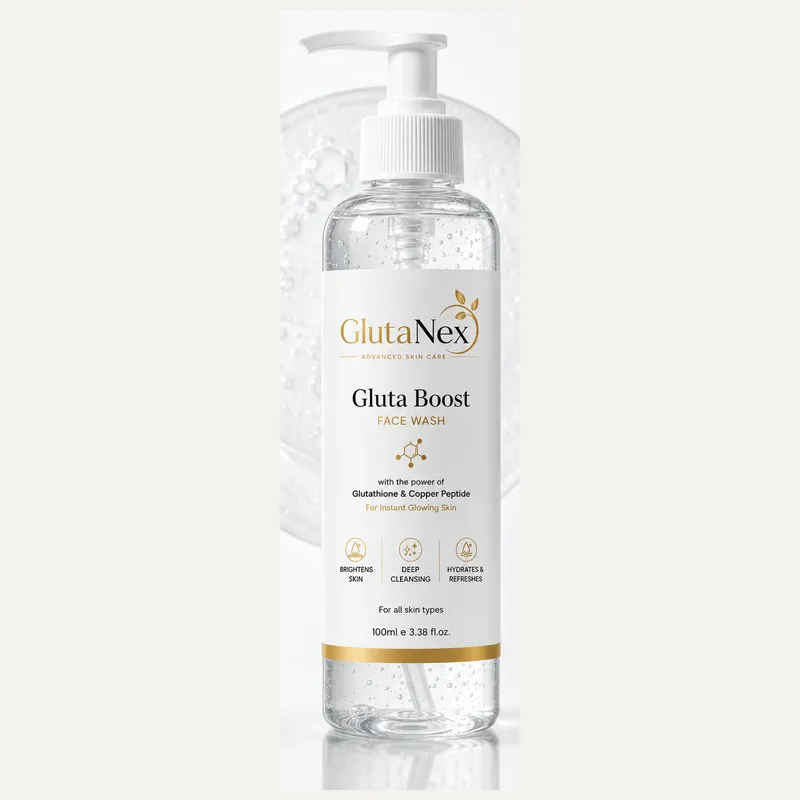 Face Wash
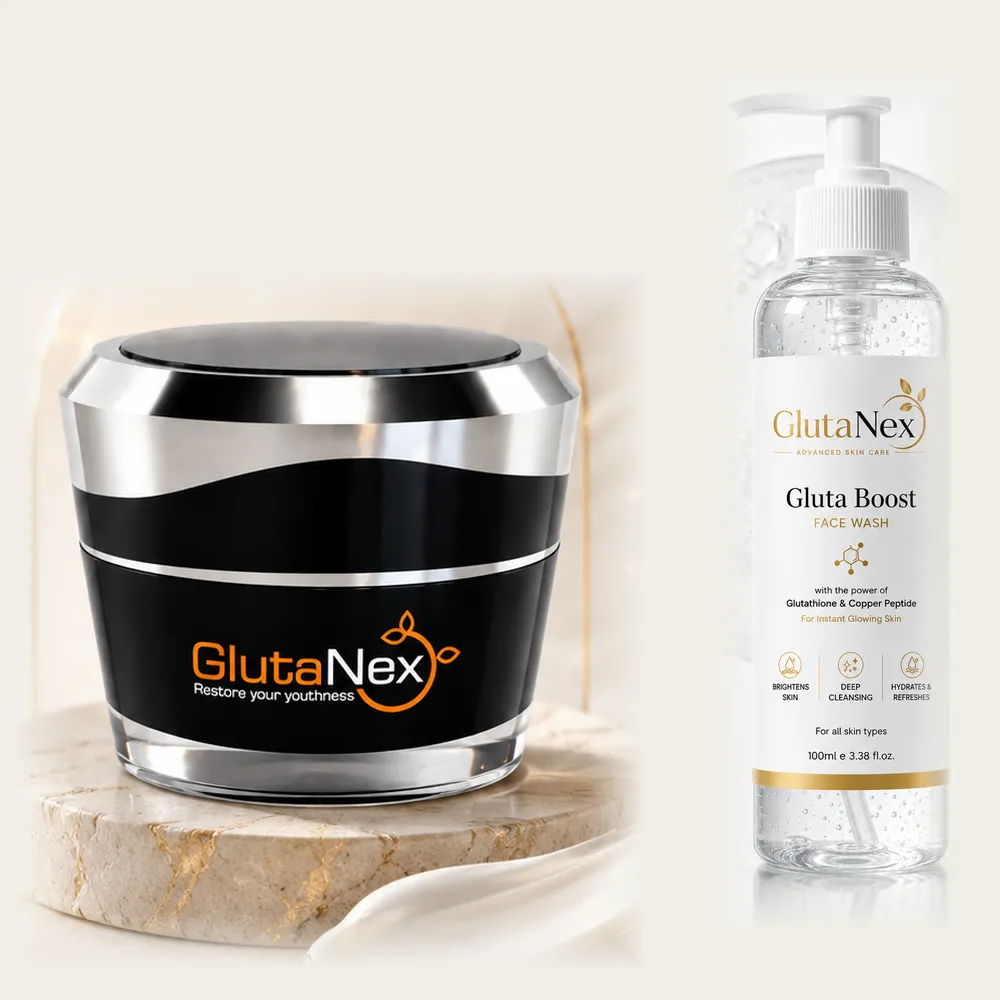 Glow Duo
 Shower Gel
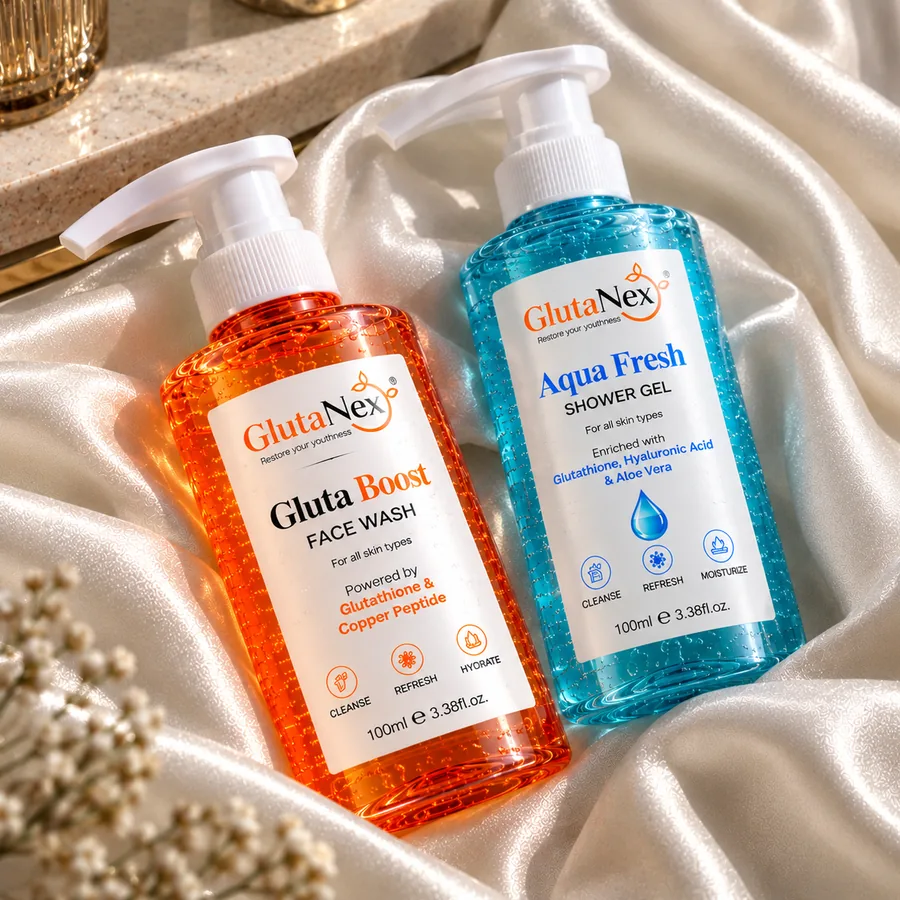 Wash + Gel Combo
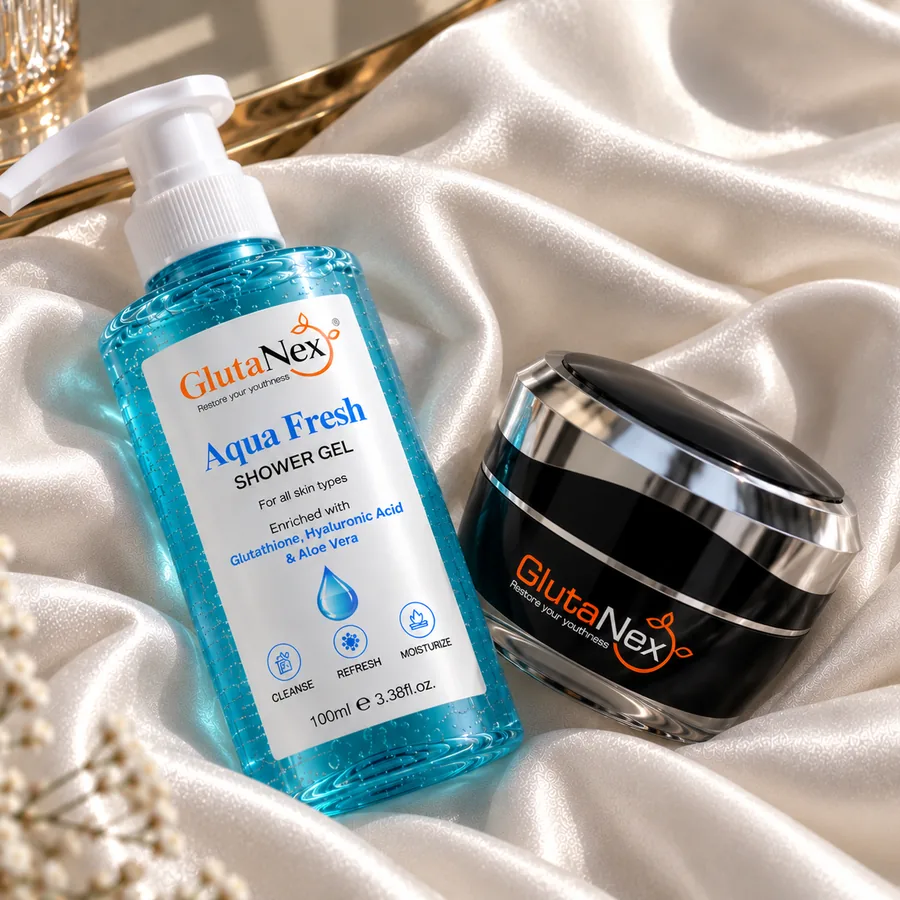 Cream + Gel Combo
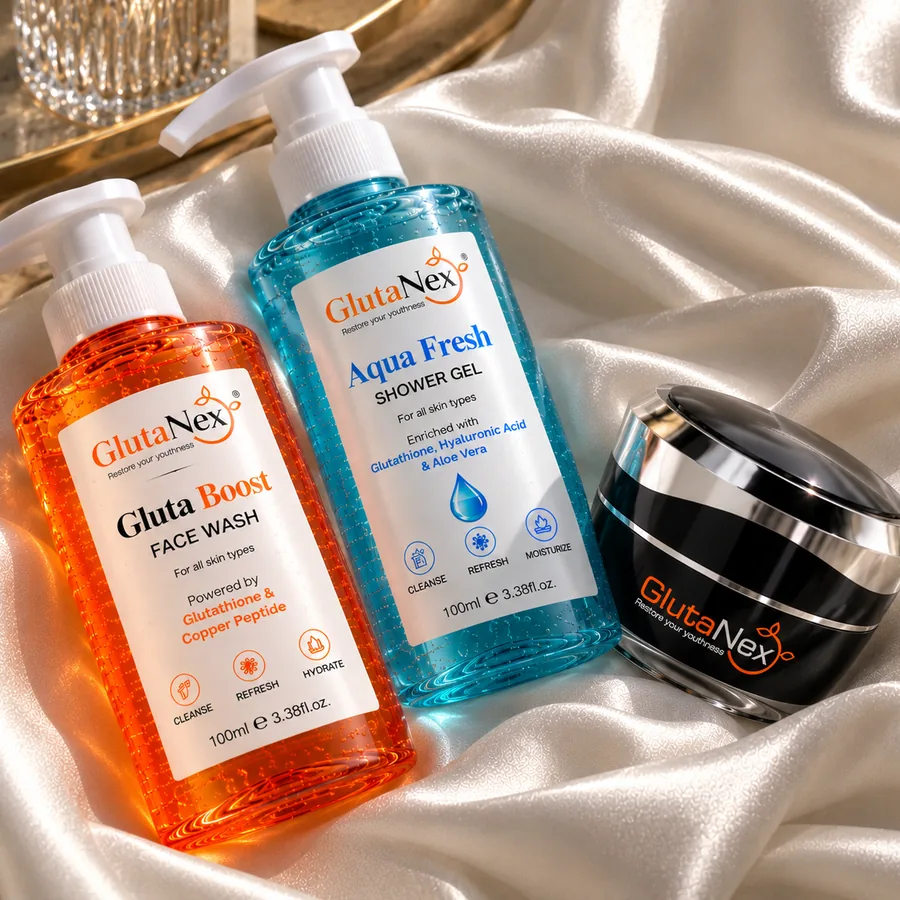 Glow Trio