
Glutathione and peptides together: what peptides do and how to use both
Can you use glutathione and peptides together? What cosmetic peptides are, what they can realistically do, why glutathione is itself a peptide, and how to use both.
Can I use glutathione and peptides together?
Yes. Peptides and glutathione are both gentle and are often combined in one cream. Glutathione is used for a brighter, more even-looking tone, while peptides are used for skin that looks smoother and firmer over time. Neither one weakens the other, so the pair suits most skin types.
Is glutathione a peptide?
Yes. Glutathione is a tripeptide, a small chain of three amino acids: glutamic acid, cysteine and glycine. In skincare it is used mainly as an antioxidant, while the peptides marketed for firmness are different, usually longer chains designed for that purpose.
What do peptides do for skin?
Cosmetic peptides are short chains of amino acids used to help skin look smoother, firmer and better moisturised. Their effect is gentle and builds slowly over weeks. They are not a substitute for sunscreen, and they will not remove deep lines or sagging.
Glutathione and peptides can be used together, and in a way glutathione already is one: it is a tripeptide, made of just three amino acids. The peptides you see on cream labels for firmness are different molecules with a different job, so the two complement each other. The honest catch is that both work gently and slowly.
Glutathione vs cosmetic peptides at a glance
| Glutathione | Cosmetic peptides | |
|---|---|---|
| What it is | A tripeptide antioxidant (glutamic acid, cysteine, glycine) | Short amino-acid chains made for skincare, often several types in one product |
| Main cosmetic job | Brighter, more even-looking tone over weeks | Smoother, firmer-looking, well-moisturised skin over weeks |
| Typical age group | Adults of most ages | Most often chosen from the late 20s onwards |
| Irritation risk | Low | Low |
| Main downside | Small studies; does not change natural skin colour | Results are modest and vary a lot between formulas |
What peptides are, in plain words
Proteins such as collagen and elastin are built from amino acids. Peptides are short pieces of those chains. In skincare, brands use them because the skin may respond to some of them as signals, or because they help a cream feel conditioning. You will see broad groups on labels: signal peptides (aimed at firmness), carrier peptides (often bound to copper), and peptides that are mainly there to moisturise.
The evidence for most cosmetic peptides is real but limited. Expect softer, smoother-feeling skin and fine dry lines that look a little less obvious, not a facelift in a jar. If someone promises that, they are overselling. Our guide on glutathione for wrinkles sets out what is realistic for lines.
What glutathione adds
Glutathione is used for tone rather than texture. A 2025 review called topical glutathione promising but noted the studies are small and short (Khanna et al., J Clin Aesthet Dermatol 2025). It is a reasonable choice for dullness, tan and uneven-looking skin, as long as you use sunscreen every day and expect weeks, not days. More here: glutathione benefits for skin.
Put together, peptides look after how smooth and supple skin feels, while glutathione works on how even it looks. That is why both often appear in creams aimed at people in their 30s and 40s, along with retinol. See glutathione cream for your 40s.
Where peptides fit in a GlutaNex routine
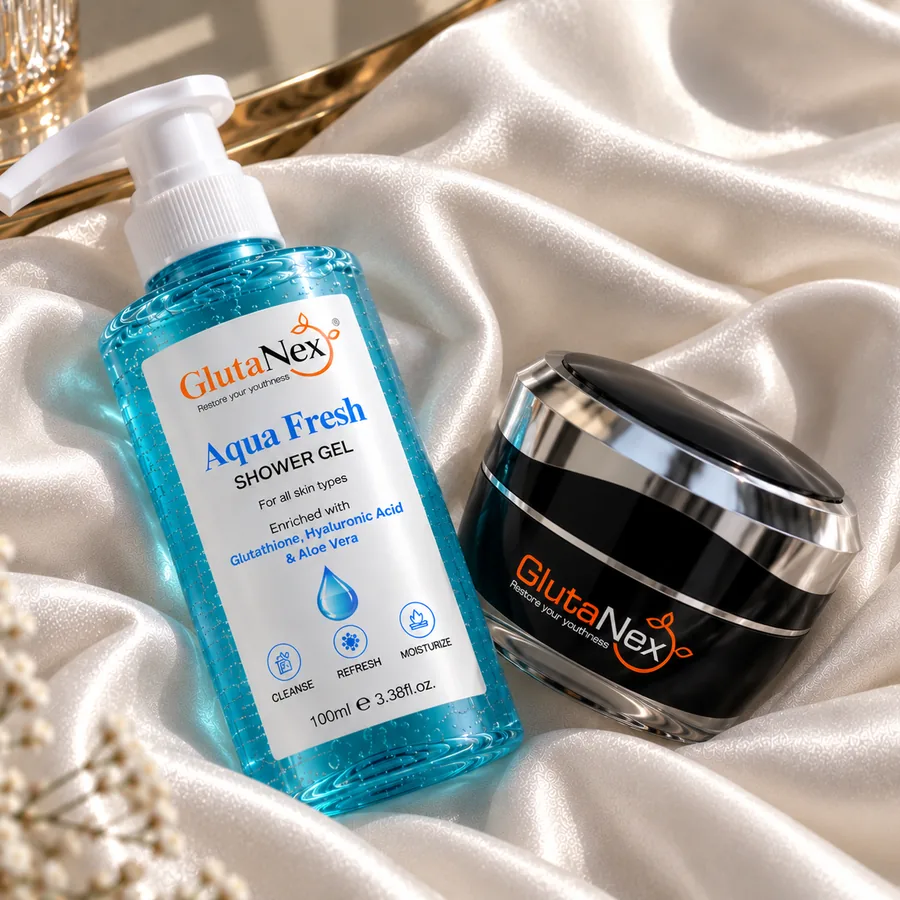
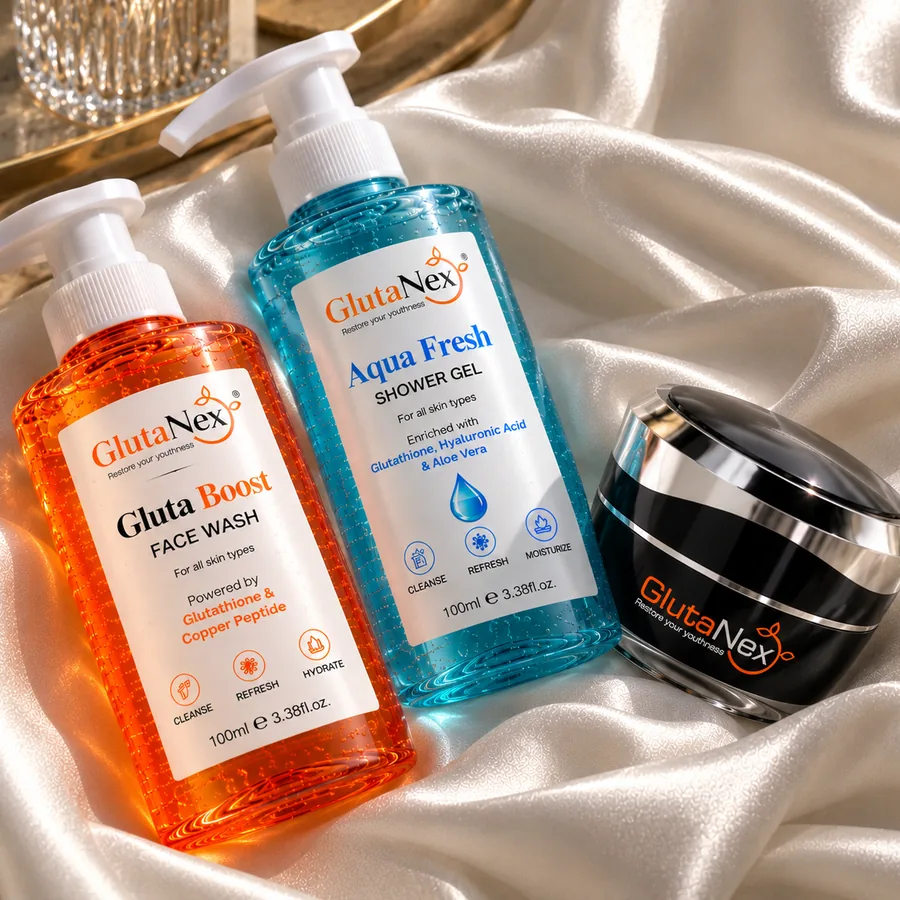
GlutaNex Glutathione Night Cream contains glutathione, peptides, niacinamide, hyaluronic acid, vitamin C, retinol, ceramides, salicylic acid, aloe vera, turmeric and neem. The retinol does the heavier lifting for texture, so the peptides play a supporting role. Because of the retinol and salicylic acid, the cream is for night use only, and you should start 2 to 3 nights a week. The full list is on glutathione cream ingredients.
You do not need to add a separate peptide serum to a cream that already has peptides. If you like serums, a plain hydrating one is more useful in dry months.
How to use glutathione and peptides together
- Patch test on the jawline for two nights.
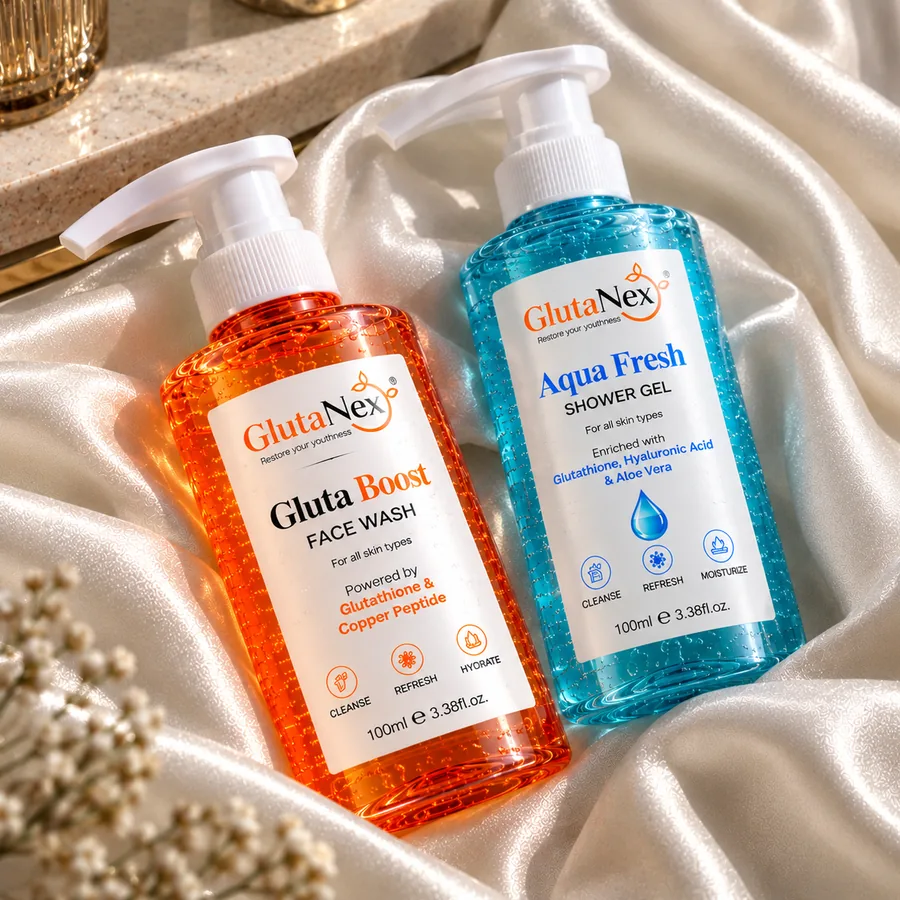
- Cleanse gently at night with a mild face wash such as Gluta Boost Face Wash and pat dry.
- Thinnest first. If you use a separate peptide serum, apply it before the cream and give it a minute to sink in.
- Pea-sized amount of cream, dotted on the forehead, cheeks and chin, then spread. Keep away from the lips and the inner eye area.
- Start slowly if the cream also contains retinol: 2 to 3 nights a week for the first few weeks.
- Sunscreen every morning. Sun damage is the biggest reason skin looks older and uneven, so this step does more than any peptide.
The step order is the same as in how to use glutathione cream.
Pairing tips and mistakes
- Copper peptides and vitamin C: opinions differ on using them at the same moment. To be cautious, keep a strong vitamin C serum and a copper peptide product on different nights or at different times of day.
- Peptides with strong acids: very acidic peels may not be the best partner for peptides on the same night. Alternate instead. See glutathione vs glycolic acid.
- Expecting collagen to be added. Peptides do not put collagen into your skin. Our guide on glutathione and collagen explains this honestly.
- Changing products every two weeks. Give any routine 8 to 12 weeks before deciding.
- Ignoring sleep, water and sun. Late nights and daily sun show on the face faster than any cream can undo.
When to see a dermatologist
See a dermatologist for deep lines or sagging you want treated, for melasma, for any rash, or if you are pregnant or breastfeeding and unsure which products are safe. A cream with peptides and glutathione is a cosmetic product, not a treatment.
- Khanna R, Rambhia P, Chapas A. Systematic review of the efficacy and safety of topical glutathione in dermatology. J Clin Aesthet Dermatol. 2025;18(9):51-54.
General information about cosmetic skincare, not medical advice. Results vary from person to person. See a dermatologist for persistent or changing pigmentation.
More glutathione guides
Glutathione: what it is, what it does for skin, and how to use it safely
The complete guide: what glutathione is, how it affects skin, every form compared, and the research.
GuideGlutathione shower gel: what it can and cannot do for your skin
What a glutathione shower gel does in a rinse-off product, what to expect from it, how to use it and how it fits with a leave-on glutathione cream.
GuideHyaluronic acid and aloe vera in a body wash: what each ingredient does
What hyaluronic acid and aloe vera do in a shower gel, why they are popular in body washes, and what to expect from them in a product you rinse off.
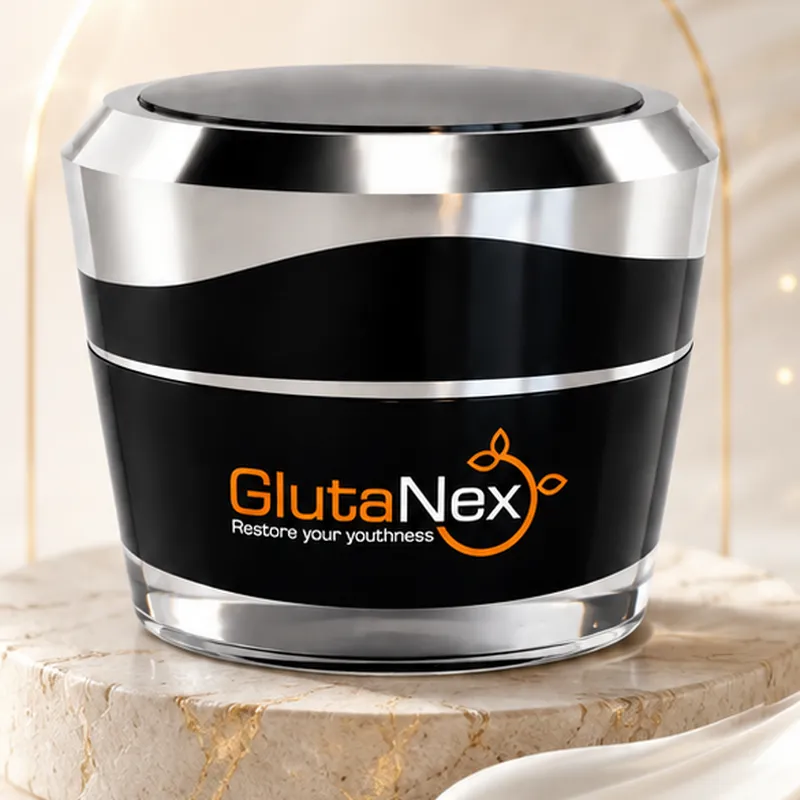 Night Cream
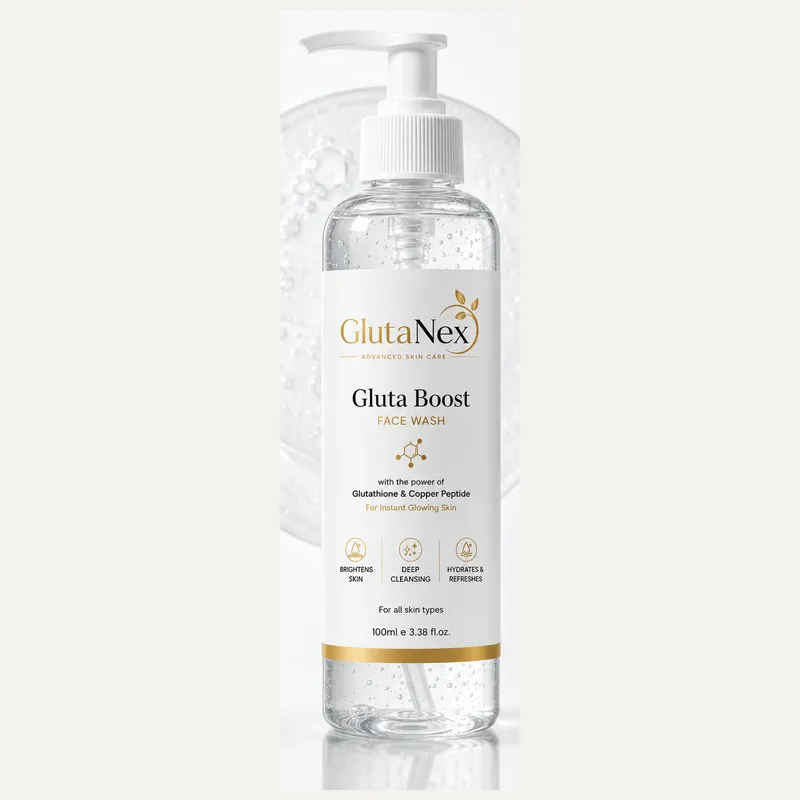 Face Wash
 Glow Duo
 Shower Gel
 Wash + Gel Combo
 Cream + Gel Combo
 Glow Trio